May 8, 2026
Toward Maximum Well-being
Design has spent the last century optimizing for maximum functionality. From Bauhaus to Apple, the trajectory has been clear: make tools that work better, faster, more universally. But we've reached the ceiling. When everything just works, the competition moves to the next frontier: maximum well-being.
The Fundamental Reframe
Optimizing for maximum functionality requires universal solutions. A light switch works the same way everywhere. A car door opens the same way in Tokyo and Toledo. These designs achieve universality by removing variables—by standardizing around the 50th percentile human.
But optimizing for maximum well-being requires the opposite: particular solutions. Not better-for-everyone. Better-for-you.
This is not a small difference. These are opposing design strategies.
Why This Shift Is Happening Now
For most of design history, the bottleneck was universality. We didn't have enough resources to make good things, so the goal was to make one good thing that worked for everyone. Standardization meant efficiency. Mass production meant availability.
But technology has inverted this logic. Now we have the opposite problem: infinite configurability is paralyzing. We can make anything for anyone, but which anything? Which anyone?
The shift from universal to particular is now possible because:
- Manufacturing is distributed and affordable enough that particularity is economically viable
- Data is abundant enough that we can understand individual preferences at scale
- We've solved the functionality problem—the baseline is now so high that further optimization yields diminishing returns on happiness
Design Implications: Five Principles for Well-being
If the goal is maximum well-being through particular solutions, what does that look like in practice? We've identified five principles:
1. Zero Lag → Connection
There are two kinds of lag: physical and spiritual. Physical lag is the delay between intention and action—the milliseconds it takes your light bulb to turn on after you tap the switch. Spiritual lag is the distance between you and your tool—the sense that the object is doing something to you rather than extending you.
When a Wi-Fi-connected smart home app takes 2 seconds to toggle your lights, it's not just slow—it breaks the sense of direct control. You become aware of intermediary systems. The tool stops being invisible and becomes an obstacle.
But here's the twist: true individualization means the object itself is different. Not a universal light switch with smart controls, but a light switch shaped to your hand. Not a car door that opens digitally, but a door handle that feels right when you grip it. True zero-lag design removes the intermediary by making the tool personal enough that it feels like a direct extension of yourself.
2. Exact not Complicated → Clarity
Apple's great insight was that simplicity means fewer features, not simpler features. A universal product must accommodate everyone, which is why it has 47 settings nobody uses.
Particular products can be different: instead of universal complexity, they can be exact simplicity. A camera designed for landscape photographers doesn't need video features. A notebook designed for your handwriting doesn't need to fit everyone's way of writing.
3. Irregular by Default → Expression
Industrial design standardized variation out of existence. A doorknob is a doorknob. But humans are not standard. We vary in size, strength, preference, ability, and taste.
Particular design embraces this variation. It asks: what if the object was different because you are different? Not accessible alternatives, but primary designs. Not accommodating variation, but celebrating it.
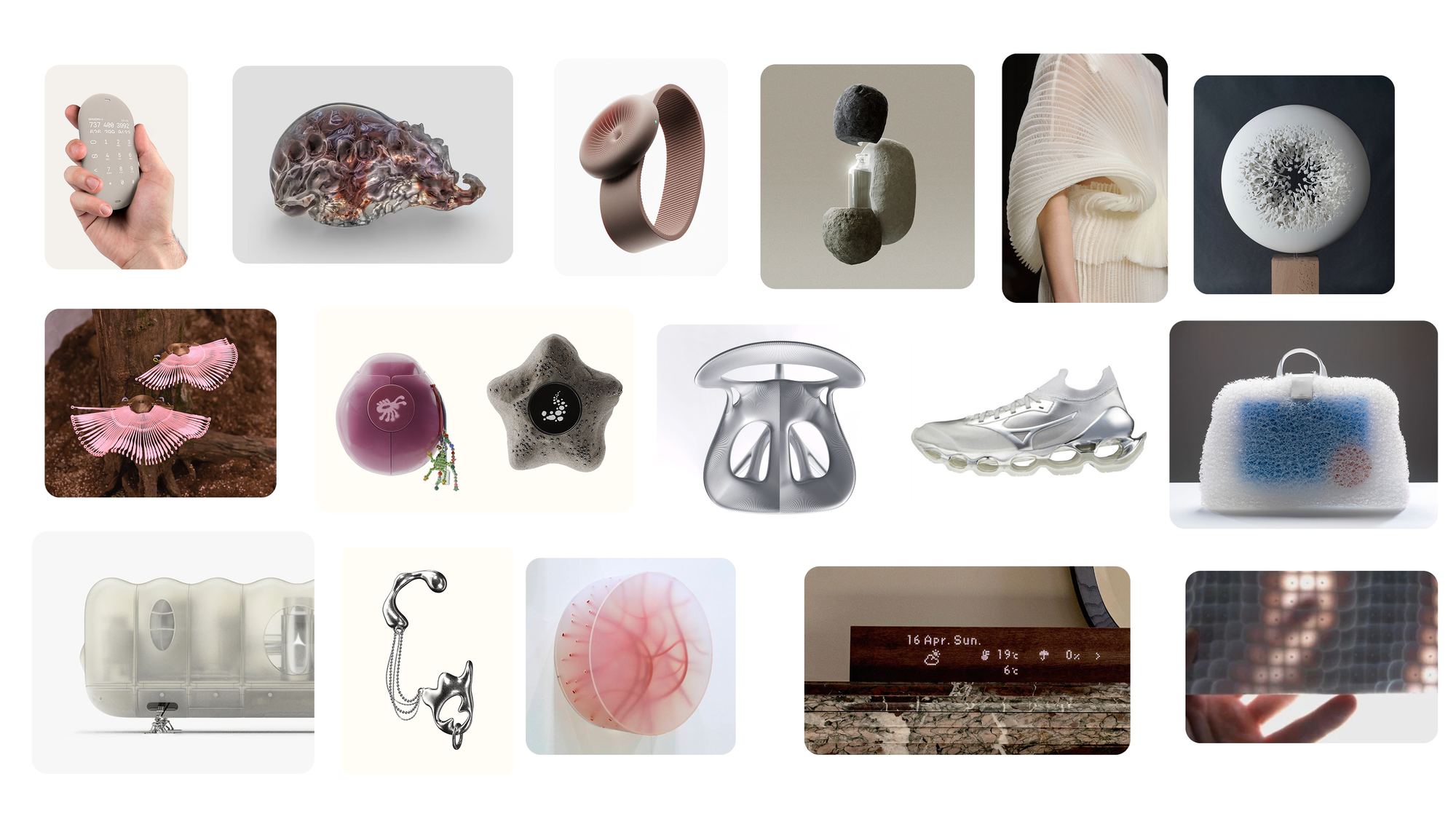
4. Organic/Biophilic → Evolutionary Comfort
Humans evolved in natural environments. We have deep, often unconscious preferences for natural patterns, materials, and scales. A room with a curved wall feels different than a room with a right angle, even if we can't articulate why.
Particular design aligns with individual evolutionary preferences. Not universal biophilia, but your biophilia. The shapes and materials that call to you specifically.
5. Narrative/Symbolic → Meaning
Objects carry stories. A chair designed by a master craftsperson carries the story of their life. A teapot inherited from your grandmother carries family history. A tool made specifically for you carries the story of being known.
Universal products try to be neutral—to carry no story that might alienate someone. But this neutrality is actually a kind of erasure. Particular products can be loud about their narratives because they're not trying to be for everyone.
From Bauhaus to Post-Apple: The Evolution of Particular Beauty
The history of design is the history of solving problems in order. Each era solves one dimension and hands off the competition to the next.
The Craft Era solved quality. Craftspeople made excellent things, but in small quantities. The problem was availability.
The Industrial Era solved availability. Mass manufacturing meant everyone could have a good thing. But these good things were expensive. The problem became affordability.
The Modern Era (Bauhaus through Apple) solved functionality. Good design meant universal design—accessible, intuitive, reliable across populations. The frontier was pushing functionality further: smaller, faster, more powerful, more universal.
But we've hit the ceiling. A modern smartphone is so functionally excellent that adding more functionality decreases well-being. We've optimized functionality to the point where it's no longer the limiting factor.
The Post-Apple Era is about something different. It's about designing for the person, not the population. It's about optimizing for well-being rather than functionality. It's about particular beauty instead of universal form.
Opportunity and Necessity
This shift from universal to particular is both an opportunity and a necessity. It's an opportunity because it allows for truly delightful, personalized experiences. It's a necessity because generic excellence has become generic mediocrity—the default is now so high that failing to feel particular is failing to feel good.
The tools and capabilities to design for particular well-being now exist. The constraint is imagination, not technology. The question is no longer 'can we make this work for everyone?' but 'what does maximum well-being look like for this specific person?'
This is the new frontier of design. Not maximum functionality. Maximum well-being. Not for everyone. For you.